Dear CABS Friends and Supporters,
Our anti-poaching operations for the second half of the year have begun. Our teams in Northern Italy and on Malta have made a successful start and caught several bird trappers in the act. Our bird protection camps in Cyprus and Lebanon will also be launching soon.
First autumn poacher caught in Malta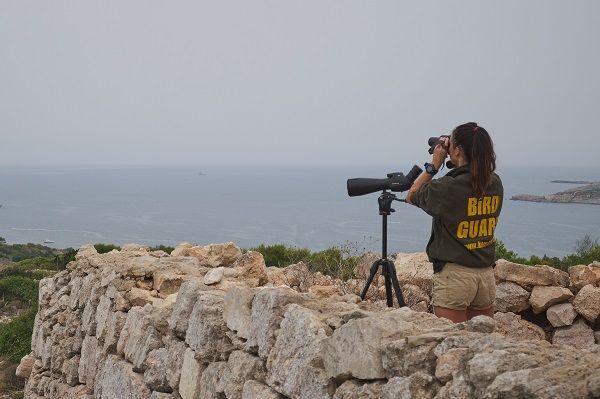 The autumn poaching season has officially begun in Malta. During August, early migrating waders like sandpipers, plovers, and dunlins are targeted by illegal trappers using lures and clap-nets as they funnel through the archipelago. These protected birds are trapped to be kept as live decoys for hunting or traded into private collections. Following reports from the Committee Against Bird Slaughter on a dozen suspicious sites, police caught their first offender red-handed operating clap-net near the airport. Subsequent raids in the south and west have also led to the confiscation of multiple clap-nets, set nets, and other trapping equipment.
A great start in Italy: three songbird poachers caught at Lake Garda! 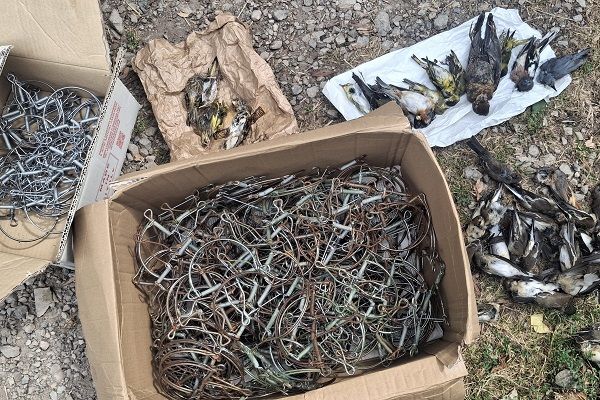 Our bird protection camp in northern Italy has only been running for a few days, yet the first poachers have already fallen into our trap: in the mountains between Lake Garda and Lake Iseo, we caught two licensed hunters using illegal snap traps to catch protected pied flycatchers and redstarts – species regarded as seasonal delicacies on the black market. The men had fitted their hunting huts – from which they are legally permitted to shoot thrushes in autumn – with electronic decoy devices that played the song of the pied flycatcher, to lure the birds currently passing through the area. The authorities were alerted and confiscated 64 traps, as well as two decoy devices and 22 dead pied flycatchers. In another case, a bird trapper was caught with six snap traps north of Brescia; he had already caught 18 birds. In addition, a good dozen decoy birds being kept illegally in cages were freed, including chaffinches, thrushes and crossbills. These alpine corridors are a critical migration route, and our bird protection camp will continue until the end of the pied flycatcher migration in September. Hope on the Horizon: CABS Returns to Cyprus for Autumn Migration 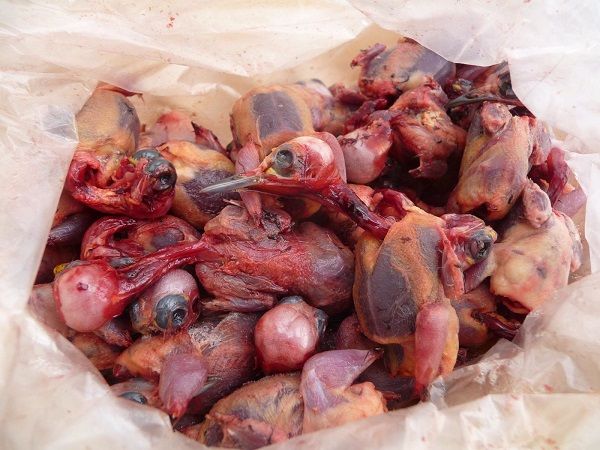
As our autumn Bird Protection Camp soon begins in Cyprus, the Committee Against Bird Slaughter (CABS) is back on the frontlines to end the illegal trapping and hunting of migratory songbirds. Our carefully selected teams will conduct field investigations to track down hidden mist-nets, glue-coated limesticks, and electronic callers, working directly with law enforcement to dismantle traps and safely release live birds back into the wild. Poachers target these songbirds driven by huge profits in the underground market. The birds are sold to secret restaurants to be served whole as ambelopoulia - an illegal local "delicacy". Driven by organised crime networks, single plates can fetch over €70 for a dozen cooked birds, turning critical migratory stopovers into a lucrative illegal trade. Last autumn, CABS uncovered over 130 active trapping sites, saving thousands of birds and teaming up with naturalists Chris Packham and Megan McCubbin to spark high-profile police raids on the most notorious trapping gangs. With stronger enforcement showing real results, we enter this season’s camp hopeful for a safer flyway!
SINGLE DAD OF THE CENTURY!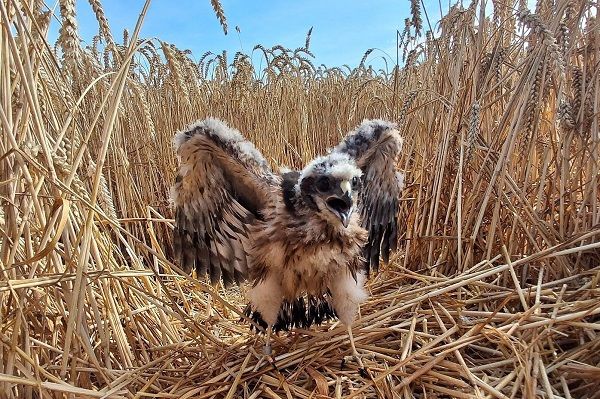 A 135-year first in the Rhineland! For the first time since 1891, a Hen harrier has successfully fledged in the Zülpicher Börde – a large agricultural plain southwest of Cologne and Bonn (Germany). But this historic conservation milestone almost ended in heartbreak. Shortly after two chicks hatched in a local wheat field, the mother suddenly vanished. With harrier fathers known strictly for hunting - never brooding or directly feeding young - the brood seemed doomed. Then, nest camera footage captured something never before documented in this species. Driven by pure instinct, the single dad took over full-time parenting! He sheltered the remaining chick from the cold nights and blistering summer heat, while carefully feeding it himself. To give this heroic father a hand, CABS officers regularly left extra mice near the nest, while the local farmer allowed us to cordon off the area to keep it safe during the wheat harvest. Against all odds, the young harrier took its historic first flight last week; the first to do so in the region in 135 years! Against all odds, human teamwork and one extraordinary father bird turned a potential tragedy into a historic conservation triumph!
Thank you for your continued support,
Alexander Heyd and Lloyd Scott |
|